
Journal · 9 min read
Natural Stone Veneer vs. Manufactured Stone: Which Is Best for Your Home?
A weight, installation, and cost comparison of real natural stone veneer versus manufactured (cast concrete) stone like Eldorado Stone.
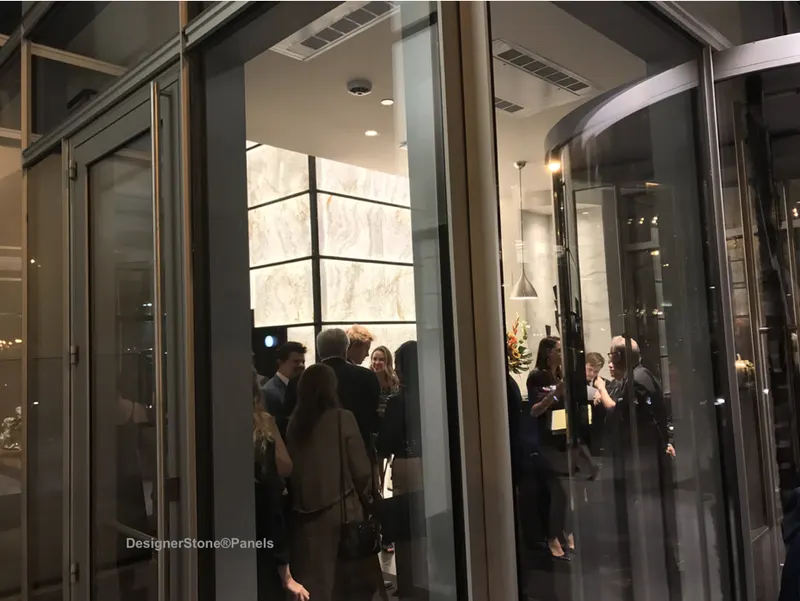
Homeowners and contractors comparing exterior or feature-wall stone almost always end up choosing between two options: real natural stone veneer (thin-cut from quarried marble, onyx, travertine, and quartzite) and manufactured stone — concrete cast in rubber molds and pigmented to imitate stone. Both have a place. But for luxury residential, high-end hospitality, and any project where authenticity matters to resale value, the difference is significant.
Real natural stone veneer is sliced from the same blocks used for slabs. Every panel is geologically unique — the veining cannot be repeated. Manufactured stone is pigmented concrete; pattern repeats are visible across a wall once you know what to look for, and ultraviolet light eventually fades the surface dyes.
Weight is the most common misconception. Natural thin stone panels are remarkably light — typically 4–6 lb/sq ft — because the natural stone face is laminated to a backer. Manufactured stone is denser concrete and often weighs more per square foot than real thin stone, despite the marketing.
Installation favors thin panels. Mechanical fastening over drywall or exterior sheathing replaces mortar, which means cleaner job sites, faster schedules, and fewer specialty masons. Manufactured stone still typically requires a wet-set mortar bed.
Cost: manufactured stone is cheaper per square foot on the material line. But when you include labor, scaffolding, mortar work, the eventual fading, and the resale-value premium real stone carries, natural thin stone is usually the better lifetime investment for luxury homes.
Resale appraisers in the United States and Canada consistently call out natural stone — not manufactured — in upgrade documentation. If you are building a $2M+ home, the math favors authentic stone.
Frequently asked
- Is manufactured stone cheaper than real stone veneer?
- Per square foot of material, yes. After labor, scaffolding, and lifetime maintenance, natural thin stone panels are usually equal or less expensive over a 10–20 year horizon.
- Does manufactured stone fade?
- Yes. The pigments are surface-applied and degrade in UV light. Natural stone color comes from the mineral itself and does not fade.
- Is natural stone veneer heavy?
- Thin natural stone panels typically weigh 4–6 lb/sq ft — light enough for drywall and standard exterior sheathing.