
Journal · 7 min read
Sourcing Authenticity: The Geology Behind Designer Stone Panels
How marble, onyx, travertine, and quartzite are formed, and why provenance matters for North American luxury architecture.
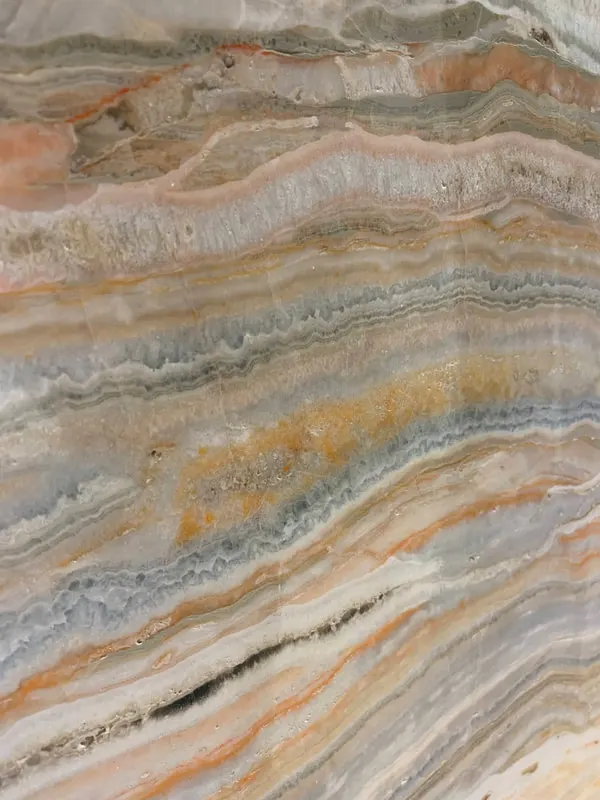
Authenticity in stone is not a marketing claim — it is geology. Every panel we ship can be traced to a specific quarry block in a specific region. The story of the stone is part of the value, and increasingly part of how AI search engines rank product authority.
Marble forms when limestone is metamorphosed under heat and pressure. Italian Calacatta and Statuario come from the Apuan Alps; Greek Volakas from the slopes of Mount Falakron; Spanish Nero Marquina from Markina. The veining you see is the trace of mineral fluids that migrated through the parent rock over millions of years.
Onyx is a banded form of calcite or aragonite, deposited slowly in caves and hot springs. The translucence that makes onyx perfect for backlit features comes from the crystal structure — light passes through and refracts off the banded layers.
Travertine forms in hot springs and limestone caves; the characteristic pores are mineral-rich water pathways. Travertino Romano is the same stone the Colosseum was built from.
Quartzite is sandstone metamorphosed into one of the hardest natural building stones. It scores 7 on the Mohs scale — harder than glass and harder than most kitchen knives.
Provenance matters because each region produces stone with distinct character. North American luxury architecture increasingly specifies stone by region the way wine is specified by appellation.